Leadership
Leadership
March 10, 2026|by Jin Sei Ryu
As leaders, most of us work diligently and intentionally to be clear in our instructions and directions. We aim for precision in our verbal communication and, when necessary, in our written messages. Clarity matters. It prevents confusion. It establishes structure.
But communication is not limited to words.
Non-verbal communication, including tone, presence, energy, posture, and engagement, often carries equal or greater meaning. Understanding intention, emotion, and context is just as important as understanding language.
Not everyone speaks up easily. Some are reserved. Some lack confidence. Some carry anxiety. Some process internally and take time before expressing themselves. To assume that everyone will articulate discomfort in the same way is unrealistic.
Leadership therefore requires acute awareness of those around us.
We are taught to read a room, and to observe subtle shifts. If someone who normally engages regularly suddenly withdraws, should that not prompt quiet inquiry? If someone who is usually warm and expressive becomes distant or subdued, should we not gently ask if they are alright? If someone who is normally flexible, suddenly winces during stretching, should we not be concerned for their condition?
Changes in behaviour are communication.
If, as leaders, we fail to become aware of these non-verbal cues, and if we fail to encourage our team members to develop the same awareness, cultural drift begins to occur over time. Slowly, almost invisibly, disconnection grows. Assumptions replace conversations. Organisational blind spots develop.
The structure may remain intact. The policies may still be clear. But the heart of the culture begins to shift and perhaps deteriorate.
In a values-based organisation, compassion and attentiveness should not feel forced. They should arise naturally from shared principles. Responsibility for connection should not sit on one side alone. It is not only the junior who must speak, nor only the senior who must instruct. There is a mutual obligation to remain aware and care for one another.
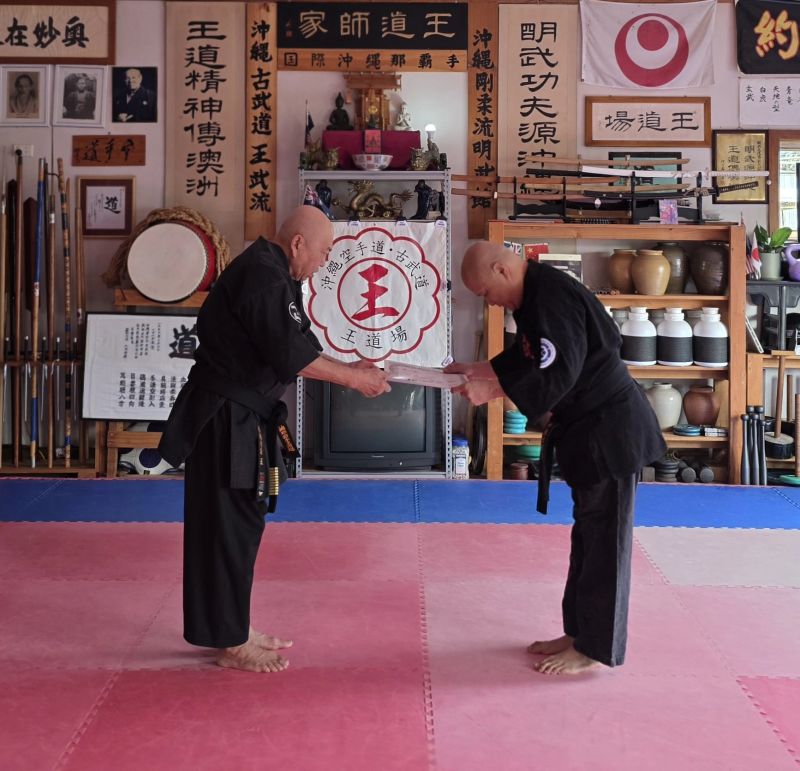
Our martial arts training teaches us about awareness, distance, timing, subtle shifts in energy. The same discipline must extend beyond technique into human connection.
Clarity builds efficiency. Empathy builds trust. Awareness protects culture.
Without awareness, drift occurs. Without empathy, trust erodes. Without trust, even clear communication loses its power.
Leadership, at its highest level, is not only about being understood. It is about ensuring others feel cared for and understood – both in a verbal and non-verbal sense.