Others
ALIGNING DOJO LEARNING AND TEACHING | Rethinking Martial Arts Education
November 7, 2026|by Jin Sei Ryu
One thing I have come to appreciate over five decades as a student and four decades of teaching martial arts is that student and instructor development are closely interconnected.
As students progress, their learning needs change. Instructors must continue to develop their knowledge, capabilities, and approaches to teaching.
Traditionally, martial arts instruction often followed a standardised approach. Students were expected to adapt to their instructors’ methods, rather than the other way around.
Today, we recognise that students have different learning needs, abilities, and approaches to acquiring knowledge. Good instructors recognise these differences and adjust accordingly.
Over many years, experienced instructors develop an intuitive understanding of what students need, what to teach, and when. This judgment comes from practice, observation, experience, and reflection. It distinguishes a good teacher.
This raises an interesting question:
What if we approached student learning and instructor development as two interconnected, integrated, and aligned parts of the same educational process?
Consider the student’s experience.
A student attends class to develop their skills, often with their next grading requirements in mind.
After class, they may wish to practise what they have learned. Traditionally, they would refer to a written syllabus, recall their instruction, and perhaps consult explanations or instructional videos.
But what if we could make learning more personalised, allowing students to take greater ownership of their development while remaining connected to their instructors?
Now consider the instructor’s experience.
Instructors prepare lessons drawing upon their knowledge, experience, and understanding of students. Over time, they develop the intuition to recognise what needs attention and how best to respond.
But what if we could better support this process, helping instructors become more informed, reflective, and responsive to students’ evolving needs?
I believe we can create a more meaningful connection between how students learn and how instructors develop as teachers.
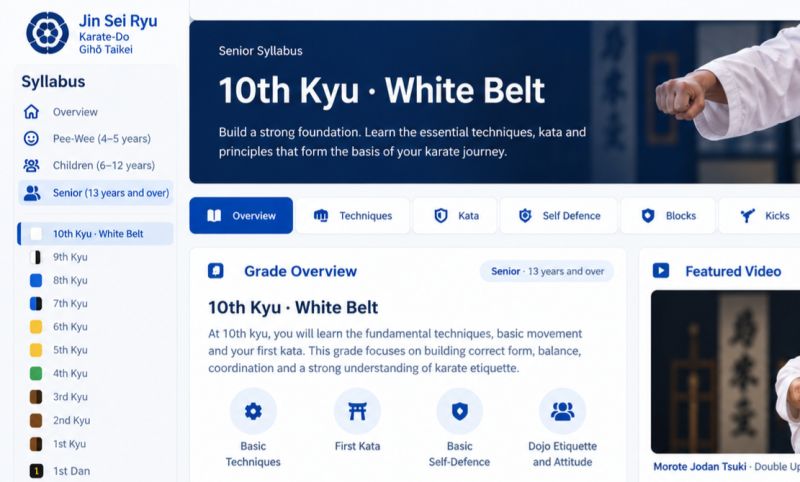
At Jin Sei Ryū Karate-Dō International, this thinking is guiding the development of Gihō Taikei (技法大系), our digital learning and teaching resource.
Our objective is not to replace the experience, intuition, or human relationships that make traditional instruction meaningful, but to support students and instructors throughout their development.
After all, meaningful growth in learning and teaching begins with profound reflection.
If others in the martial arts or broader education community have been exploring similar ideas, I would welcome the opportunity to connect, exchange perspectives, and perhaps share some ideas.